Showing posts with label healthcare construction. Show all posts

Thursday, June 7, 2012

Today's Hospitals: Innovations in Technology and Medical Care Part IV

Here's the last part of my topic : Today's Hospitals: Innovations in Technology.
Thanks for taking time in reading my posts. Your comments are welcome :)


Mom assisting daughter with a hospital meal 
Hospital Food is Getting Healthier

The hospital menus can be laden with high-fat comfort foods. There are some medical institutions that have even invited fast-food franchises to set up a stall on hospital premises. But today hospitals are becoming more positioned as models of healthy eating for patients and for employees. Diabetes-friendly, Heart-healthy and vegetarian selections are increasingly common. They also promote organic, and locally produce foods.


Woman advocating for her mother in hospital 
Patient Advocates Can Also Help
Consumer groups say your hospital stay will be safer and comfortable if there is another person there in your room to watch out for you and will be the one to ask questions on your behalf. Most often families assign and ask relatives or close friends to serve as patient advocates.


Woman arguing with nurse in hospital 
Patient Advocate's Strengths
Patient Advocates should be able to help you carry off your care, ask questions, express concerns on your behalf, and will be the one to do the research and keep track of your treatment options and medicines. Advocates are most helpful when they raise their concerns with a healthy dose of kindness and respect. There are families who hire professional patient advocates. Sometimes hospitals have patient advocates on staff already that will help you.


Pregnant woman researching hospitals online 
Quality of the Hospital Goes Public
There are some organizations that make hospital information public so that you can check out the hospitals' quality at anytime you want.There are several ways to find hospital information , including The Joint Commission's "Quality Check" program, the U.S. Department of Health and Human Services' "Hospital Compare" tool, and the Agency for Healthcare Research and Quality. There are also states that offer hospital quality websites.


I am excited to read your thoughts! Just leave a comment on the comment section. Will be glad to read it. Thanks!!

Wednesday, June 6, 2012

How to Choose a Hospital?

We all get ill for various reasons,at any point of our lives and for that we should know ahead of time and be aware of the medical center that can give you imminent treatment or test. It is very important for a patient to know what the hospital's services are that will suit their requirements.

First you make a list of your preferred hospitals, which gives you treatment of your medical condition. For example, if there is someone who needs a heart surgery then it might be possible that a smaller or nearby hospital doesn't provide such surgery. There also hospitals that are unequipped or they don't have specialized doctors to perform the certain procedure.
So How to choose a good hospital?
I have here a few points that you might want to consider:


1. Health Insurance Security: You should check if your health insurance or medi-claim covers that hospital.


2.Doctor Preference: You may have a preferred doctor. In that case, you'll have to check if that doctor is connected with any of the medical centers in question.


3. Distance: Is the hospital located at a convenient distance from your residence? You do not want to choose a hospital which is located very far away. And that the travel would take long and make it difficult.


Right click on image for save options.
4. Security Question: Does the hospital allow an individual to attend by your bedside 24/7? It is very important that you check with the hospital authorities in case you want to look after your dear ones closely. 


5.Privacy Concerns: Do you want to be in private rooms? Does the hospital offers it? There are many medical centers that doesn't offer any private rooms; all they have are general wards. So, if you what to be in a private room because of your medical condition, inquire if your chosen hospital provides it. 


6.Safe or Unsafe: Does the hospital have a safe track record? Every state health department has a track record of every hospital. You can first review the hospitals on your list and find out which one you'd like to choose.
Remember not to forget to ask your doctor about their role in treating you at the hospital. Now, whichever hospital you select and howsoever long you stay; make sure you keep yourself safe.


Tuesday, June 5, 2012

Today's Hospitals: Innovations in Technology and Medical Care Part III

Detail of a presurgery checklist 
Safety Awareness
When performing complex procedures, even experienced hospital staffs can miss a step. However, to avoid these some hospitals are adapting new methods used in aviation and the military to help them improve patient safety. "Situation awareness" training –It is knowing what's going on with patients at all times .This helps staff in avoiding complications and reduce infection rates. Using checklists and time-outs for final verification before the start of every surgery reduces errors, too.


Doctor washing hands after seeing patient 
Fight against Infections
 
Hospitals are considered a place of healing. But 99,000 patients are estimated to die each year from dangerous infections acquired during their stay in the hospitals. These mainly include infections of the bloodstream, uti, and surgical sites. But here is the good news: Some hospital-acquired infection rates are dropping, like methicillin-resistant Staphylococcus aureus (MRSA), which declined 28% from 2005 to 2008. The reasons for the drop include increased alertness, improved hand-washing hygiene, and other MRSA-prevention steps. 


Nurse fitting patient with surgical stocking

Fighting Deep Vein Thrombosis (DVT)

There are at least 50,000 of patients a year that dies from pulmonary embolism. This is a very dangerous condition to where blood clots most often in the legs travel to the lungs, where they cut off blood flow. The risk factors for DVT or Deep Vein Thrombosis include surgeries and bed rest which is most common for hospital patients. Hospitals reduce this complication through the use of faster treatment and anti-clot medications before surgery, and by encouraging patients to move around after surgery. There are devices like the screening tools, compression stockings that helps the patients recovery. 


Man in hyperbaric chamber at wound care center

Specialty Hospitals Offering Options

There are already hospitals that has its specializations of surgeries, such as heart or spine surgery. Specialty hospitals often uses the very latest resources for their work. So more focused care also can mean acquiring quality care at lower costs.


Thursday, May 31, 2012

Today's Hospitals: Innovations in Technology and Medical Care Part II

Mother nursing newborn in hospital bed 
  The Rise of 'Rooming In'
 
Generations ago, newborns were taken away to nurseries while their moms recover elsewhere. Later, hospitals sent families home with bottles of formula. Today, labor, delivery, and recovery often occur in the same space, with mothers and infants staying together and benefiting from skin-to-skin contact. Breast milk is best for babies, unless the mother has a specific medical reason not to breastfeed. Experts say "rooming in" promotes this natural process.


Doctor using remote to direct the RP6 Robot 
Connecting with Rural Hospitals

The rural hospital experience is now transforming because of modern technology.There are already robots who helps specialists rapidly diagnose stroke cases and consult on treatment in multiple far-flung hospital locations. Unlike the usual video conferencing, robots can approach the bedside along with the attending physician. Similar technology is emerging in cancer and other highly specialized fields.


Digitially generated prescriptions  
Medication Errors Prevention
Now, hospitals can employ several methods to make sure the right medicine reaches the right patient. These include computerized medication orders rather than handwritten notes, "smart" IV pumps that alert nurses to unsafe dose levels, and computer-controlled storage cabinets that use barcode scanning and other safety features.


Tuesday, May 29, 2012

Today's Hospitals: Innovations in Technology and Medical Care Part I

A patients point of view from a gurney

What Lands You in a Hospital Today?

How do you Land in a Hospital Today?
Based on a study ,more than 34 million Americans are being discharged from hospitals each year.The most common reasons are pneuomonia, congestive heart failure, pregnancy or childbirth,coronary artery disease and osteoarthritis. While some other reasons for those who seek hospital care remains fairly constant, hospitals are now using technology to improve the experience of patience in their recovery and wellness.


Nurse filling in patient data on electronic tablet

Medical Records are now Digital

Hospitals are now gradually shifting from paperworks to electronic medical records to minimize errors, comply with hospital regulations, and to enable scattered care providers to share data/information. Record systems can vary widely. There are hospitals that allow doctors to write their prescriptions online, access test results, and view medical images. However, many hospital systems are not yet fully integrated with the physician offices.


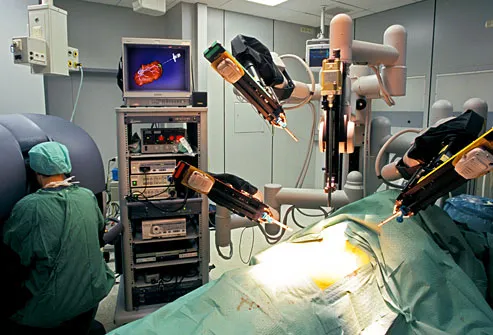
The Da Vinci robot surgical system in use

Robotic Surgery

We all know that robots will never replace actual human surgeons in hospitals. But these high tech devices can move with great precision and can hold instruments steady for long periods. The surgeons are the ones who guide the robotic “hands” from the same room or from a remote location. Surgeries that uses robotic systems include hip replacement, reversal of tubal ligations, removal of prostate, gallbladder, or kidney, kidney transplant, and many gastrointestinal procedures.


Mom assisting daughter with a hospital meal

Smart Design Matters

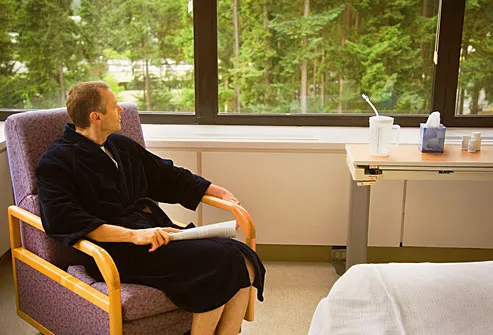
The environment in hospitals greatly affect patient outcomes. Some of the hospital designs are intended to incorporate to the new technology. Strategically located sinks , better air filtration will help reduce infection risk. There are also Noise control which improves sleep and recovery , especially for young children. Music, access to sunlight and nature view can also enhance the stay of patients. The improvements lead to more staff satisfaction as well.


Welcoming Families

There are already some hospitals already that are moving away from semi-private rooms and imposing strict limits on visitors in favor of family-friendly designs and policies. New designs might include more private rooms to encourage family members to stay overnight.


---------------------------------------------------------------------------------------------------

ps: i dont own the photos

Sunday, May 27, 2012

Modern Hospital Equipment


In modern age , almost anything is improving thru developments of high-tech gadgets. The healthcare industry is also acquiring the innovation to cope up with the rise of technology.


Hospital Equipment and Hospital beds is now modern in its design and is used and is available globally.

Medical Equipments that is used daily such as treatment on couches and bandage trolleys have also been updated thru the modern technology being offered in the market today.

The beds in the hospital that were designed years ago has been overhauled with patient comfort and is giving easier nursing care at the forefront of our minds. And also the Beds now have moveable parts that will allow a patient to have a degree of comfort in their own home.

In today's time people with serious health issues for both the young and elderly can now be accommodated by hospitals with modern equipments with full trust that they will be given the excellent treatment.

It is important that hospitals will acquire the fast changing developments,from the hospital design down to its maintenance, not only with the private hospitals but as well as with the government hospitals.

Friday, May 25, 2012

6 Factors of Patient Safety in Hospitals

Patient safety in any hospital or healthcare treatment facility is one of the primary concerns around the world. Hospital designs and Hospital maintenance should be taken into consideration.

Here are some of the things that contributes to patient safety:

  • Hygiene
  • Fire Safety
  • Security
  • Waste Management
  • Equipments
  • Positive Patient Identification
Hygiene
Globally at least 1.4 million people are suffering from infections that is caused by improper hygiene in a hospital, according to the World Health Organisation (WHO). Proper hygiene consist of making sure that all the surfaces such as the walls, the floors and the table-tops are always clean and sterile. Tthe linens of hospital beds should always be fresh and that all medical staff should sterilize their hands in the proper manner, before and after seeing every patient.

Fire Safety
In a healthcare design, it is very necessary to have a properly functioning fire system in place that meets industry standards and is up-to-date on inspections. Patients at a hospital cannot encounter a greater risk to their health than a fire occurring while they are incapacitated in a hospital bed. Their should be Fire exits and it should be clearly marked and the procedures for a fire-risk emergency is posted to the public.

Security
Security safety is important for several reasons. Secure-area intrusions, theft, fighting and kidnapping are not uncommon and should not occur due to poor security measures. Locked doors to sensitive areas, personnel identification, secured medical supplies and properly trained security staff is necessary in order to avoid such mishaps as mentioned above.

Waste Management
Hospital maintenance includes the disposal of dangerous waste material which is crucial and that hospital should ensure no patients or any unsuspecting person in a medical facility comes into contact with it. For example: Contact with a used needle could transfer diseases such as aids to someone who is accidentally pricked . The Disposal of medical waste needs to be handled on a daily basis and is guided according to a strict procedure. All medical waste should be disposed and destroyed at once.

Equipment

The hospital equipments in the hospital should function properly and those who are operating the equipment should be properly trained and certified to work with it. There were recorded cases that there were deaths or injuries due to medical negligence that happened because of alleged equipment “malfunction”, only to find out that the medical staff operating it is not certified and did not received the correct training.

Positive Patient Identification
In any hospital the patients need to be accurately marked and that the hospital should have full patient file on hand before any procedure be undertaken or drug will be administered to a patient. It is uncommon that people have had unnecessary surgeries performed on them or an incorrect drug is being administered to them because of mistaken identity.

Tuesday, May 15, 2012

Hospitals in Saudi Arabia


Saudi Arabia is the home of some of the world best medical facilities.

Recent years, the Saudi regime has invested heavily in the country's healthcare infrastructure and medical facilities. It has been committed to provide large quantities of financing to produce some of the worlds top doctors to the nation.


Here is a list of hospitals in Saudi Arabia that provides you with some of the bestmedical facilities in the country. 


Almana General Hospital
Head Office Telephone: +966 3 8948300 
Al Khobar
P.O. Box 311, Prince Talal Street, Al Khobar 31952, Kingdom of Saudi Arabia
Telephone: +966 3 8987000, Fax: +966 3 8980694
Al Dammam
P.O. Box 2366, Dammam 31451
Telephone: +966 3 8262111, Fax: +966 3 8274747
Al Hofuf
P.O. Box 50367, Pin Code 31982, Al Salhiyah, Al Najah St., Al Ahsa, Hofuf
Telephone: +966 3 5887000, Fax: +966 3 5887005
King Fahd Medical Complex
P.Bo.No-946, Dhahran-31932, Kingdom of Saudi Arabia
Telephone: +966 8 440000, Fax: +966-8440000-4594
Email: contactus@kfmmc.med.sa
King Faisal Specialist Hospital and Research Centre
P.O.Box 3354, Riyadh 11211, Kingdom of Saudi Arabia
Telephone: 966-1-464-7272, Fax: 966-1-441-4839
E-mail: kfshwebmaster@kfshrc.edu.sa
Magrabi Hospital
Eye and Ear Hospital Jeddah
Khozam Street- Kilo 3, Makkah Road
Telephone: (+9662) 6365000, Fax: (+9662)6366164
Email: hospadmin@magrabi.com.sa
Eye and Ear Centre Al Madinah
Airport Road
Telephone: (+9664) 8423252, Fax: (+9664) 842 3346
Email: madina-munawara@magrabi.com.sa
Eye and Ear Centre Riyadh
Ring Road East Exit 14, Rabwa District
Telephone: (+9661) 4455049, Fax: (+9661) 4455021
Email: riyadh@magrabi.com.sa
Dental Centre Jeddah
Madina Road
Telephone: (+9662) 6644999, Fax: (+9662) 6650200
Email: dental@magrabi.com.sa
King Abdul Aziz University Hospital
P.O.Box 7897, Riyadh 11159, Kingdom of Saudi Arabia
Telephone: 478-6100
King Abdul Aziz University Hospital Jeddah
Ali Al Murtada Road, P.O. Box 1540, Jeddah 21441, Kingdom of Saudi Arabia
General telephone: 640-1000
King Fahad Armed Forces Hospital
Jaber Alsabah Road (Khasmalan Road), P.O.Box 22490, Riyadh 11426
Telephone: 252-0088
King Fahd Hospital Jeddah
P.O.Box 8488, Jeddah 21196, Kingdom of Saudi Arabia
General telephone: 660-6111
King Faisal Specialist Hospital
Al Zahrawi Street, P.O.Box 3354, Riyadh 11211, Kingdom of Saudi Arabia
General telephone: 464-7272
Emergency Room: 442-3398
Poison Control: 442-7604
Al Subhi Medical Poly Clinics
P.O.Box : 25349 Postal Code : 11466, Al Rowdah Dist., Riyadh
Tel: 01 2335000, Fax: 01 2358887
Al Yousif Hospital For Medical Services
P.O.Box : 1692 Postal Code : 31952, Khobar City, Al Khobar City.
Tel: 03 8648123, Fax: 03 8642731
Dr. Abdul Rahman Al Mishari Hospital
P.O.Box : 56929 Postal Code : 11564, Ulaya, Riyadh City.
Tel: 01 4657700, Fax: 01 4625040
Dr. Erfan & Bagedo General Hospital
P.O.Box : 6519 Postal Code : 21452, Salama, Jeddah.
Tel: 02 6820022, Fax: 02 6917747
Hai Al Jamea Hospital Dr. Darweesh Moustafa Zagzoug
P.O.Box : 10153 Postal Code : 21433, Makkah Road, Jeddah.
Tel: 02 6806666 Fax: 02 6340006
International Medical Center
P.O.Box : 2172 Postal Code : 21451, Sharafiyah, Jeddah.
Tel: 02 6509000, Fax: 02 6509290
Kingdom Hospital
P.O.Box : 84400 Postal Code : 11671, Mursalat, Riyadh City.
Tel: 01 2751111, Fax: 01 2750234
King Khalid University Hospital
Ad'Diriyah District, P.O. Box 7805, Riyadh Kingdom of Saudi Arabia
General telephone: 467-0011
King Khaled Eye Specialist Hospital
P.O.Box 7191, Riyadh 11462, Kingdom of Saudi Arabia
General telephone: 482-1234
Prince Sultan Cardiac Centre
P.O.Box 9991, Riyadh 11625, Kingdom of Saudi Arabia
General telephone: 479-1000
Prince Salman Hospital
P.O.Box 56773, Riyadh 11564, Kingdom of Saudi Arabia
General telephone: 441-1100
Maternity and Children's Hospital
P.O.Box 13877, Jeddah 21414, Kingdom of Saudi Arabia
General Telephone: 665-2600

Najd Specialized Hospital
P.O.Box : 41116 Postal Code : 11521, Khurais Road, Riyadh City. Tel: 01 4917849 - Fax: 01 4455024

National Hospital
P.O.Box : 2715 Postal Code : 11461, Malaz, Riyadh City.
Tel: 01 2914285 - Fax: 01 4767546
National Medical Care Co.
P.O.Box : 29393 Postal Code : 11457, Khurais Road, Riyadh City. Tel: 01 4931881
Obeid Specialized Hospital
P.O.Box : 3484 Postal Code : 11471, Malaz, Riyadh City.
Tel: 01 4762695 - Fax: 01 2065783
Riyadh Chinese Medical Center
P.O.Box : 59181 Postal Code : 11525, Ulaya, Riyadh City.
Tel: 01 2801799 - Fax: 01 2801808
Saudi European Dental Clinic
P.O.Box : 1888 Postal Code : 31441, Mujammah, Dammam City.
Tel: 03 8277700, Fax: 03 8291499
Sultan Bin Abdul Aziz Humanitarian City
P.O.Box : 64399 Postal Code : 11536, Militray Academy, Riyadh City.
Tel: 01 5620000, Fax: 01 5620056

------------------------------------------------------------------------------


Tuesday, May 8, 2012

Medical Equipment Supplier

 IHCCO or International Hospitals Construction Co. Ltd. is one of the leading Medical Equipment Supplier in the market today. Its Ordering and Installation is fast and easy.
 
The selection, procurement & the installation of its state-of-the-art medical quipment is required for hospitals and medical universities by enforcing economy of scale for purchasing, thus it guarantees better pricing, financial terms and conditions, thereby decreasing delivery and installation timeliness.
 
In IHCCO they insure that all departments related to medical equipment are correlated and managed under one roof to insure on time delivery and installation, compliant with the project’s management schedule and deadlines.

Overy the years IHCCO has been offering:
For more IHCCO services you may refer to my preview post IHCCO SERVICES

You can also view their projects. Just click on the link

You can contact them at
P.O.Box 126133 Jeddah 21352 K.S.A
Tel: +966 2 6905126
Fax: +966 2 6983229
Email:
info@ihcco.net


Friday, May 4, 2012

Medical Clinics in Saudi Arabia

Whenever you are out traveling. Its good to have a small list of Medical Clinics to the place you are going, well in some cases you might never know when emergencies arise.
If you are going to live in or visit Saudi Arabia, it'll be helpful if you know where you can find the nearest medical clinics.


So here's the list of Medical Clinics in Saudi Arabia


Dr. Sulaiman Al-Habib Medical Center, Saudi Arabia
a highly reputable and one of the largest providers of comprehensive healthcare services in the Middle East. HMG is currently operating 9 Medical Facilities, including 7 Hospitals and 3 Medical Centers across the Kingdom of Saudi Arabia and UAE

International Medical Center - IMC
The 300 bed, state-of-the-art International Medical Center (IMC) is a multidisciplinary hospital that is committed to delivering a service like no other. One that would captivate it’s visitors and staff, engulfing them in it’s new approach to medicine and building a new culture that will take patience to grow but will soon be transmitted to future generations as the Islamic standards in healthcare.

Child Guidance Clinic
CGC aims to raise awareness on important problems and psychological illness among children.

Derma Clinic Saudi Arabia
This is a center for dermatology, laser and plastic surgery in Saudi Arabia.

Al-Dukair Clinic Saudi Arabia
Offers a complete medical services to companies, individuals and insurance companies in Saudi Arabia.

In this clinic you can avail their Laser hair removal.

Samir Abbas Center, Saudi Arabia
SAC offers medical & health services and solutions for women in Saudi Arabia.

Specialized Clinics, Saudi Arabia
A Medical center in Riyadh, Saudi Arabia that provides specialized medical services in the areas of dermatology, plastic surgery, orthopaedics and orthoplasty and ENT surgery.

---------------------------------------------------------------------------
if you are looking for expert architects to provide medical clinic designs, hospital designs and  hospital maintenance----> IHCCO or International Hospitals Construction Co. Ltd. is there to give you the service you need. 


Thursday, May 3, 2012

IHCCO SERVICES


IHCC was founded with one guiding purpose in mind:
To relieve the suffering and improve the life of mankind in the Middle East & North Africa region and beyond. 
 
They will set out to do, by the grace of Allah, through building and staffing world-class hospitals that tend thousands of patients each day. The success they have achieved is securely based on the long history and extensive experience in designing, building and equipping tertiary care hospitals and educational projects with a value of more than 2 billion Saudi Riyals for different clients in the MENA region including the largest chains of private hospitals in the Middle East & Africa.


In IHCCO they offer the following services


They have competent, experienced architects that are experts in health care industry design educational projects design and in the urban & master planning of mega projects. The medical planning for different hospital departments is coordinated with the respective department heads of our strategic alliance of hospital groups.


  • Construction of hospitals, diagnostic centers, Centers of Excellence, medical towers, clinics, hospital housing projects, medical universities, medical educational institutes, wellness centers and fitness gyms all on a turnkey basis.
  • Execution of civil works with the highest quality results for any project, endeavor our satisfaction is assured by highly qualified, certified and experienced staff and workers.
  •  Execution of electrical and low current systems.
  • Execution of heating, ventilation and air conditioning (HVAC) works.
  • Execution of plumbing, fire fighting & sanitary works.


Their architecture & engineering arm can offer the following concept & detailed designing based on modern software & techniques for any project related to the health care industry:
  • Structure of physical plants
  • Electric infrastructure
  • Low current systems like CCTV, MATV, Nurse Call, Public Address,
  • Central Clock, Fire Alarm and Computer Networking.
  • Plumbing, Fire Fighting & Sanitation
  • Heating, Ventilation & Air Conditioning (HVAC)
  • Medical Planning and operations flow
  • Medical Equipment Planning & Installation


- Selection, procurement & installation of state-of-the-art medical equipment required for hospitals and medical universities by enforcing economy of scale for purchasing, thus guaranteeing better pricing, financial terms and conditions, thereby decreasing delivery and installation timelines.
  • They insure that all departments related to medical equipment are correlated and managed under one roof to insure on time delivery and installation, compliant with the project’s management schedule and deadlines.  


IHCCO can manage human resources to start up any hospital or educational project by using best practices for the hiring and training of doctors, consultants, surgeons, paramedical staff, administration, IT and finance staff from the different countries of the world. This guarantees diversity, synergy, professionalism and productivity for the client.


  • They can offer a complete operational management system including the powerful scientific tools like the Balance Score Card, Care (Risk Management Solution), and HR Portal (Software for Human Resource Management). All their constructed hospitals are JCI (Joint Commission International) accredited. Their alliances with (German, American, Turkish) hospital management companies make them unique in providing hospital operational management services to their valuable clients.


The operation of any healthcare project is more difficult than construction and it is very important to have maintenance department in the running project who can properly maintain the building, electro-mechanical & medical equipments and IHCCO can offer this services for maintenance of any health care project as per entire satisfaction of Clients & operational management.


IHCCO can offer the services of design & construction for any existing healthcare project to improve the internal & external finishes without disturbing the operational flow for patients. They can renovate any building as per requirements of our valuable Clients with the help of our experienced & competent architects, structural, electrical, HVAC and plumbing engineers, site engineers, surveyors, planning engineers and project managers.


Thursday, April 26, 2012

Hosipital Design to Improve Patient Safety


Hospital design has been one of the focus over the years. The relationship between the physical environment and health-related outcomes is unquestionable. The aid industry is spending more time and energy to understand how successful hospital design can improve patient safety. And as the medical international organization turns to architects and designers for answers, evidence-based design takes center stage.


Hospital archictectural design or Healthcare design must be considered to ensure the safety of everyone who comes into contact with health services and is one of the most important obstacles facing health care today.


To improve safety for patients, it should be assess how patients would  be harmed, it should also be reported and the incidents should be analyze. In learning from such incidents and implementing the solutions will help minimize the incidents to reoccurr.


According to a gathered data, patient falls are the most common event in hospitals, and such are usually associated with both individual patient-related risk factors as well as environmental risk factors, wherein suggesting a need for multi-faceted fall-prevention approaches.


Researchers have observed and said that a greater number of patient falls on carpeted floors than on vinyl and similar surfaces, but what’s more important may be the carpet-flooring pattern. In 2005 a study of older adults with dementia in a residential health facility found that carpeting with high-contrast patterns was associated with more stumbles, pausing and stopping while walking when compared to carpeting with low-contrast patterns.


In this we can conclude that healthcare architects must be rigorous in coming up with a hospital design that ensures 101% safety for patients and a design that guarantees the efficiency of the hospital operations.